
What is churrasco: a guide to real Brazilian grilled meat
You've heard of churrasco but you're not quite sure what it is? You're in the right place. Churrasco isn't simply "grilled meat": it's a ritual, a culture of fire and sharing that comes from southern Brazil — and one you can now experience in Sardinia. In this guide we explain what churrasco is, where it comes from, how the rodízio service works and which cuts you shouldn't miss.
Churrasco in a nutshell
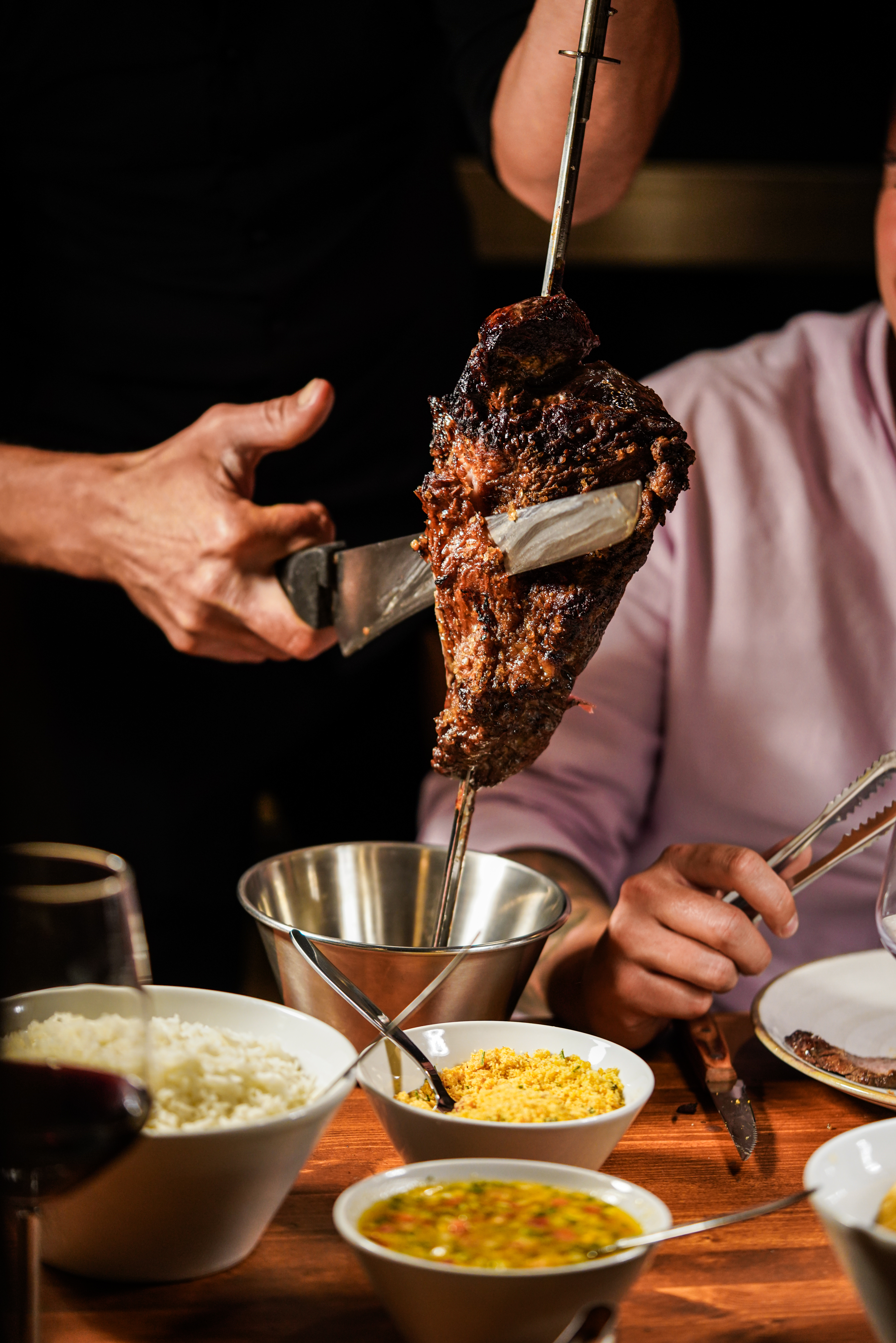
Churrasco is the Brazilian way of cooking meat over hot coals, threaded onto long skewers — the traditional "swords" — and roasted slowly over a live fire. The meat is seasoned minimally, often with nothing more than coarse salt, because the goal is to bring out the natural flavour and juiciness of the cut rather than mask it. The result: a savoury crust on the outside and a tender, pink centre inside.
Unlike a typical barbecue where everyone orders their own plate, churrasco is meant to be shared: you eat in good company, slowly, as the cuts arrive at the table one after another.
The origins: the gaúchos of Rio Grande do Sul
Churrasco was born on the plains of Rio Grande do Sul, Brazil's southernmost state, thanks to the gaúchos: the cattle herders who cooked large pieces of meat over open fires during their long days on the pampas. From a humble, pastoral tradition, churrasco grew into a symbol of Brazilian hospitality, recreated in churrascarias around the world.
What is the rodízio: the sword service
The heart of the experience is the rodízio. Instead of choosing a single dish, the servers (the passadores) move between tables with swords of meat fresh off the coals and carve the cuts straight onto your plate. You keep going as long as you like, tasting one cut after another.
It's an "all-you-can-eat" service, but a refined one: each cut has its own cooking time, its own flavour, its own moment. At Kumalè we serve 7 cuts of meat on the traditional sword, accompanied by starters, basmati rice and typical side dishes.
The churrasco cuts worth knowing
Churrasco is a journey across different cuts. Here are the stars:
Picanha — the king of churrasco. Known as the rump cap or top sirloin cap: tender, juicy, with its signature layer of fat that makes it unmistakable.
Fraldinha — a cut with an intense flavour and pronounced grain, hugely popular in Brazil.
Cupim — the zebu hump, slow-cooked to a surprisingly tender result.
Costela — the ribs, a symbol of the slow, patient cooking of true churrasco.
Churrasco vs. barbecue: what's the difference?
People often ask whether churrasco is "like a barbecue." The differences are real: a barbecue focuses on individual portions and quick cooking; churrasco is a continuous service, with specific cuts from the Brazilian tradition, a different approach to the fire and minimal seasoning. It's more an experience than a dish.
What you eat with churrasco
The meat is the star, but churrasco comes with sides that balance the flavours: rice, farofa (toasted cassava flour), vinagrete (a fresh tomato-and-onion salad), bread and vegetables. All paired with a good red wine — and at Kumalè also with native Sardinian wines and signature cocktails, because here Brazil meets Sardinia.
Where to try real churrasco in La Maddalena
You don't need to fly to Brazil. At Kumalè, a Sardinian-Brazilian churrascaria in La Maddalena, you'll find only premium-quality meat, served on the sword in the traditional way, with our Churrasco Menu at €45 per person (dinner only). A bridge between two worlds: the fire of the Brazilian grill and the flavours of the island.
👉 Explore the full menu and book your table. We're waiting for you at Località La Ricciolina, La Maddalena.